

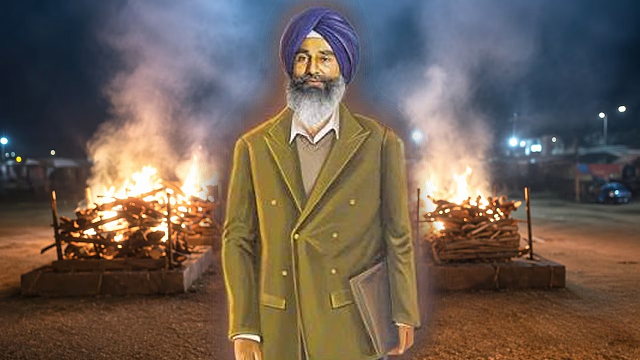
The removal of Satluj from streaming platforms in India has transformed the long-awaited biographical film on Shaheed Jaswant Singh Khalra into more than a cinematic release—it has become the latest chapter in an ongoing debate over how one of Punjab’s most painful periods should be remembered.
Based on the life of renowned human rights activist Jaswant Singh Khalra, the film chronicles his investigation into thousands of unidentified bodies that were secretly cremated during Punjab’s years of militancy and counter-insurgency. Khalra’s painstaking documentation of these cremations brought international attention to allegations of enforced disappearances, extrajudicial killings, and other human rights abuses committed during the late 1980s and early 1990s. He was abducted in 1995 and later murdered, a crime for which several Punjab Police officials were ultimately convicted.
Originally announced under the title Punjab ’95, the film spent years in limbo after India’s film certification authorities reportedly sought extensive cuts. Although it briefly appeared on the streaming platform ZEE5 under the new title Satluj, it was removed within days after government intervention citing security concerns, further fueling controversy over artistic freedom and public access to historical narratives.
Rather than silencing discussion, the film’s removal has prompted community screenings throughout Punjab and abroad, where Sikh organizations, human rights advocates, and members of the public have gathered to watch and discuss Khalra’s legacy. These grassroots screenings have become opportunities for older generations to share their experiences while introducing younger Sikhs to a period of history that many believe has received insufficient public attention.
For many Sikhs, the significance of Satluj extends well beyond the story of one individual. The renewed interest in Khalra’s work has revived longstanding calls for greater acknowledgment of the violence, disappearances, and alleged human rights violations that marked Punjab during the insurgency era. Advocates argue that confronting difficult historical episodes—including the experiences of victims and their families—is an essential step toward accountability, reconciliation, and lasting justice.
The controversy has also drawn criticism from religious leaders, civil liberties advocates, and members of Khalra’s own family, who contend that restricting public access to the film only reinforces the perception that uncomfortable chapters of Punjab’s history remain politically sensitive. The Akal Takht has called for the film to be allowed to reach audiences, describing open discussion of Khalra’s work as important to preserving historical truth.
Whether viewed as a film, a historical account, or a catalyst for public dialogue, Satluj has succeeded in bringing renewed attention to Jaswant Singh Khalra’s legacy. Three decades after his assassination, the questions he raised about truth, justice, and accountability continue to resonate far beyond the courtroom, reminding many that unresolved chapters of history cannot easily be erased from public memory.
 Panthic :: A Khalsa Press Publication
